
Help LLEAP Support Individuals with Paraplegia


Description
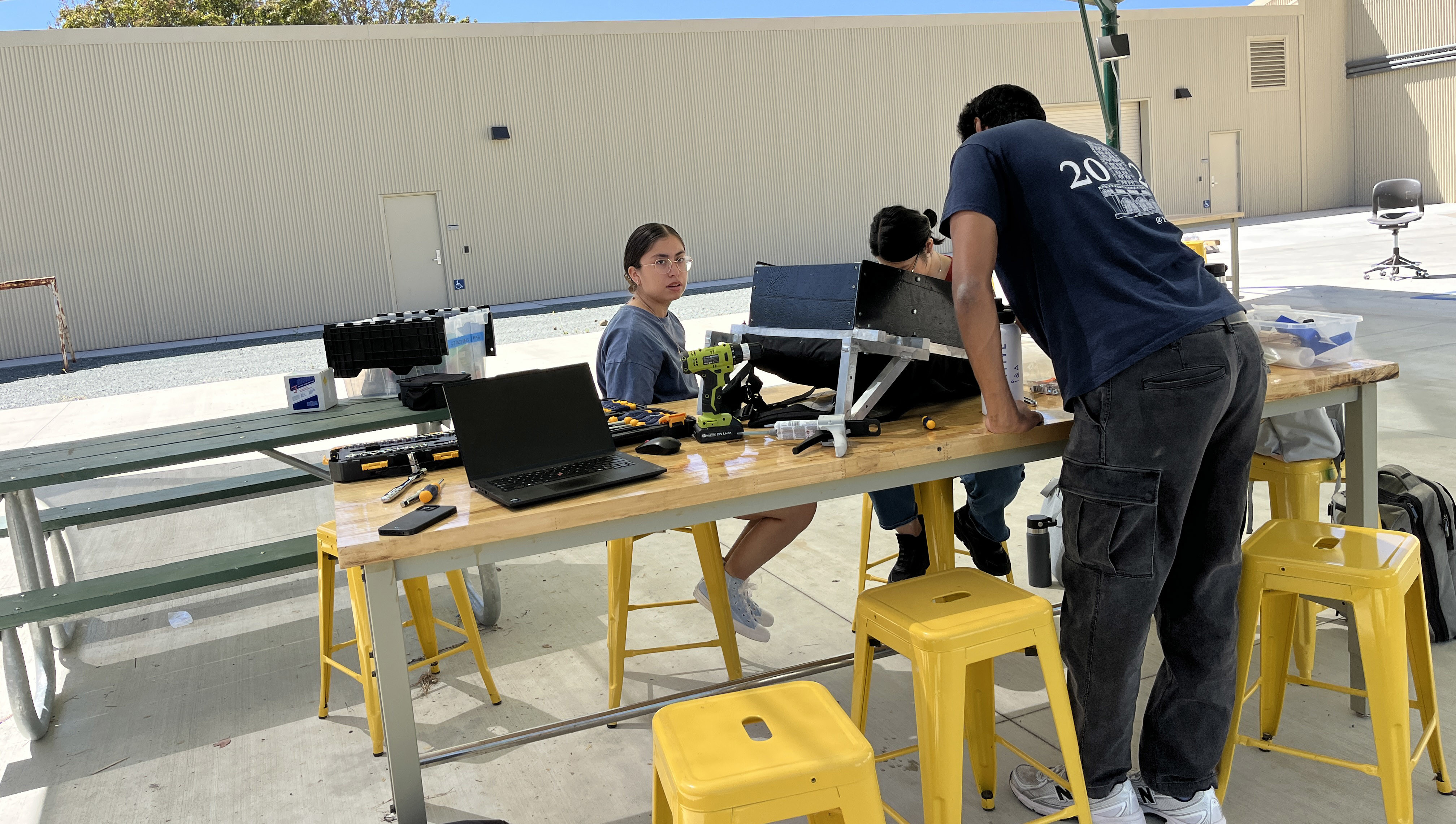
The Lower Limb Exoskeleton Assist Project (LLEAP) is a student-led club at Cal Poly developing a powered exoskeleton to functionally assist someone with paraplegia. LLEAP’s exoskeleton is a hard, active, bipedal device that supports and powers motion at the hip, knee and ankle joints. Designed to enable both sit-to-stand transitions and upright walking, the system incorporates a rigid structural frame, powered joints and soft interface components that provide comfort and stability for the user.
LLEAP gives students the opportunity to apply their classroom knowledge to an assistive technology project. Our members design parts in CAD and learn to use manufacturing tools and equipment to turn those designs into physical components. They also build electrical systems and write control software, learning how mechanical, electrical and software systems must work together in a complete device. The project serves as a platform for students to immerse themselves in the medical technology and mechanical systems fields, applying their classroom knowledge to a real-world assistive technology challenge. Through this project, students gain experience in interdisciplinary collaboration, advanced prototyping and human-centered design, while contributing meaningfully to the future of exoskeletal innovation.
Our teams are currently developing custom carbon fiber components, joint mechanisms and the electronic systems needed to control and monitor movement. Building and testing these systems requires raw materials, hardware, electrical components, tooling, and measuring equipment. These purchases are essential to making progress on the exoskeleton.
We are raising $5,000 to help cover these expenses and give our students the resources to continue building and improving the exoskeleton. Your donation supports hands-on engineering education and our goal to improve the life of someone in need.
Thank you for supporting LLEAP!
$25
Hardware and Assembly Supplies
Help stock our workspace with the hardware needed to assemble and adjust the exoskeleton.
$50
Electronic Components
Help purchase various sensors that measure joint position and provide feedback for the exoskeleton’s controls.
$100
Materials
Support the purchase of raw materials such as aluminum, carbon fiber or 3D printing filament used to create lightweight, strong components for the exoskeleton.
$200
Manufacturing and Testing Too
Help equip our workspace with the tools and measurement equipment students use to manufacture components and test their designs.
$500
Motor Controllers
Support the key components that regulate the motors powering the exoskeleton’s joints.
$1,000
Prototype Assembly and Testing
Help bring the exoskeleton together by supporting the mechanical parts, electronics and testing supplies needed to build and improve the current design.